




Wisconsin build schedules do not pause for winter. Drywall crews show up whenever the schedule calls for them, whether that’s in January or July, and insulation goes in right before they arrive. Dane County averages twenty-five very cold nights at or below 0°F and 42.6 inches of snow every year. This means a Madison area builder’s insulation schedule has to account for weather shifting from one phase to the next. Any installation mistakes, including gaps or pockets of moisture, get sealed behind drywall for the life of the home.
Insulation goes in year-round across Wisconsin. Cold shifts the checklist toward substrate temperature and moisture checks for spray foam and verified lumber drying. Heat shifts it differently, compressing attic work and watching for summer rain soaking framing. But the standard itself never moves. RESNET Grade 1 installation and the Wisconsin Uniform Dwelling Code SPS 322 energy codes apply regardless of the calendar.
As a builder planning new construction insulation, get the most consistent results by building the insulation phase into your schedule early, whatever season the framing lands in.
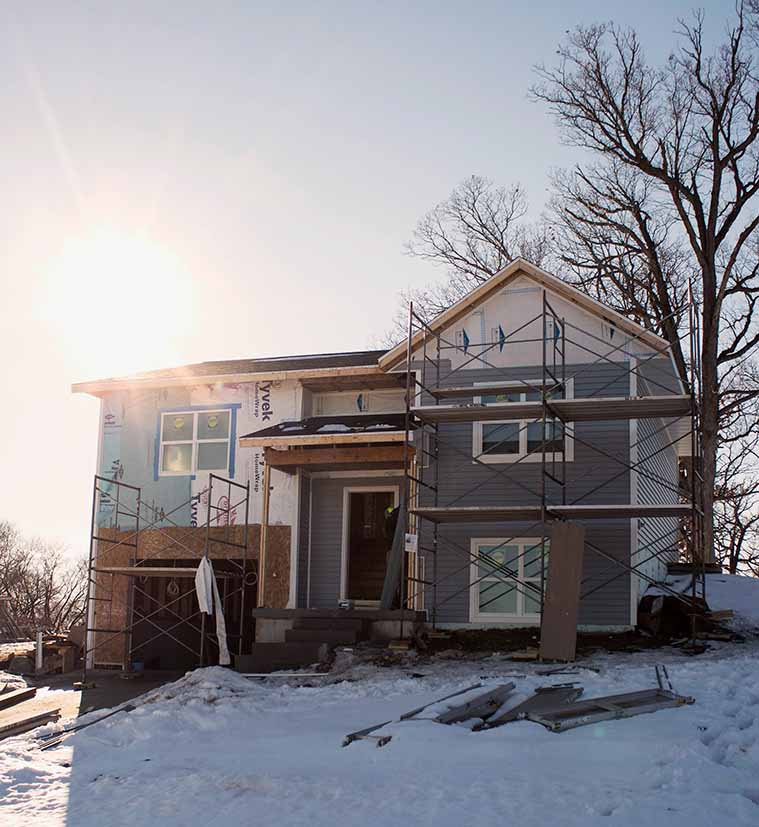
What Changes in a January Install
The Cold Itself
In Dane County, our winters average a high of 30.7°F and a low of 14.6°F, with the coldest stretch clustered between January 21st and 31st every year. This period is the tightest scheduling pinch for installing insulation in winter Wisconsin builders deal with.
Spray Foam Is Manufactured on Site
Spray foam is essentially “manufactured” at the building site, so quality control measures are vital.
Key quality control checkpoints include:
- substrate moisture content and temperature
- lift thickness
- component ratios
- storage and handling of foam components
A professional crew checks the manufacturer’s insulation installation temperature window before scheduling spray foam cold weather work, since substrate temperature spray foam requirements determine whether the foam bonds correctly.
Winter Moisture Comes in Frozen
It’s not uncommon for lumber to arrive wet, absorb moisture from snowfall during construction, or sit on the wet ground unprotected. Framing lumber should not exceed 18% moisture content before closing interior walls. Verifying lumber moisture content before drywall goes up matters most during a winter insulation install, since cold air holds less moisture and drying runs slower. Extra drying time keeps moisture from getting trapped behind the wall for good.
What Cold Does Not Change
Fibrous insulation products like batts and blown-in fiberglass are factory-made, so install-day temperature matters far less than install quality. Fiberglass insulation for builders keeps winter schedules moving even when site-applied products need a weather window, since a batt or blown-in insulation winter install does not depend on an ideal temperature.
What Changes in a July Install
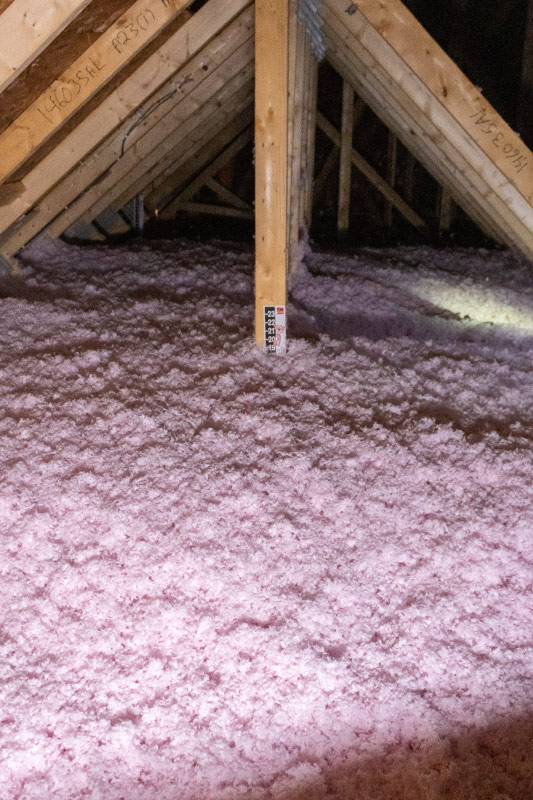
Heat Compresses the Work Window
Our summer temperatures can get hot. Dane County averages 18 days a year at 90°F or hotter, with the hottest days usually falling between July 11th and 31st. Attic insulation work gets scheduled for early hours, before heat builds under the roof deck. That is a crew planning reality rather than a code requirement, but it shapes a Madison area builders insulation schedule for attic insulation and air sealing work.
Summer Moisture Comes as Rain
Summer is Dane County’s wettest season with 14.1 inches of precipitation every year and 75% of the heaviest rain days falling between June and September. Just like with framing wettened by snow, rain-wetted framing must also dry to 18% moisture content or below before walls can be enclosed. Wet-applied products carry their own drying window, following manufacturer specifications before close-in.
The Takeaway Pairing
January and July are mirror images of each other. Whether moisture comes in the form of rain or snow, each season trades one constraint for another. Neither is the wrong month to insulate a home.
What Never Changes: The Standard
Grade 1 Installation, Every Month
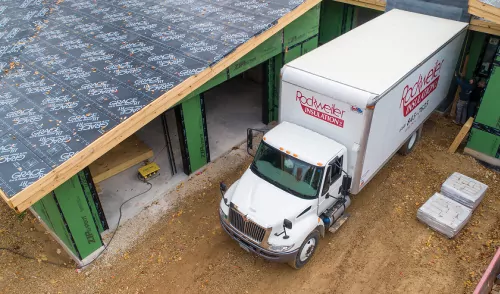
(RESNET) Grade 1 installation is the benchmark for proper insulation installation regardless of season. To meet this benchmark, insulation should be installed without misalignments, compressions, gaps, or voids along the thermal envelope. This is to help prevent the cold spots that gaps and voids can create that help condensation form inside walls, floors, and ceilings.
The Code Doesn’t Check the Calendar
Wisconsin’s Uniform Dwelling Code, chapter SPS 322, sets energy conservation requirements for one- and two-family dwellings that apply no matter when construction happens. The code sets standards in four categories, including insulation and moisture control. Its heat loss control intent is to limit heat transfer from warmer spaces to cooler ones. To help control moisture, vapor retarders that Wisconsin builders install should sit on the warm side of insulation in every season.
Even though the season changes the checklist, it never changes the standard.
FAQs
Yes. Batts and blown-in fiberglass can be installed year-round since they are factory made. Site-applied spray foam needs more planning, since substrate temperature and moisture must be verified first.
It can. Spray foam is manufactured on site, so quality checkpoints like substrate temperature and moisture, lift thickness, and component handling apply in any season.
Not necessarily. Summer trades cold for heat and rain, but the installation standard stays identical.
No. Wisconsin’s Uniform Dwelling Code (UDC) Chapter SPS 322 applies regardless of the month construction happens.
Ensure your lumber tests at or below 18% moisture content and wet-applied products are fully dry per manufacturer specifications before enclosing walls in winter.
Built for Every Month on the Wisconsin Calendar
January brings cold substrates and lumber that dries slowly. July brings heat that compresses the workday and rain that soaks framing just as fast as snowmelt does. Both are workable months, as long as the checklist for that season gets followed. What never changes is the standard. RESNET Grade 1 quality and full SPS 322 compliance remain the same on every install date on the calendar.
Rockweiler Insulation has provided new construction insulation Wisconsin builders can plan around since 1983. Our technicians are paid hourly instead of by the footage they cover. This ensures every install, whether in January or July, is done right. Planning a build in Verona, Madison, or the surrounding southern Wisconsin communities? Our team is here to install proper insulation for a comfortable, energy-efficient home year-round. Call 608.845.7625 today to schedule your free estimate.
References
Pacific Northwest National Laboratory. “Building Materials with High Moisture Content Not Enclosed.” Building America Solution Center, U.S. Department of Energy, https://basc.pnnl.gov/resource-guides/building-materials-high-moisture-content-not-enclosed.
Pacific Northwest National Laboratory. “Insulation Installation Achieves RESNET Grade 1.” Building America Solution Center, U.S. Department of Energy, https://basc.pnnl.gov/resource-guides/insulation-installation-achieves-resnet-grade-1.
Pacific Northwest National Laboratory. “Unvented Conditioned Attic with Spray Foam Insulation Below Roof Deck.” Building America Solution Center, U.S. Department of Energy, https://basc.pnnl.gov/resource-guides/unvented-conditioned-attic-spray-foam-insulation-below-roof-deck.
Wisconsin Department of Safety and Professional Services. “Chapter SPS 322 Commentary — Energy Conservation.” Wisconsin Uniform Dwelling Code, https://dsps.wi.gov/Documents/Programs/UDC/CodeArchives/SPS322Commentary.pdf.
Wisconsin State Climatology Office. “Dane County Climate Profile.” University of Wisconsin–Madison, https://climatology.nelson.wisc.edu/dane-county-climate-profile/.