
Wisconsin residents know just how unpredictable our climate can be. Winter brings snow, biting winds, and wind chills that dip to –30°F, while summer brings heat and humidity with 90°F temperatures and 70°F dew points.
If you’re lucky enough to have a screened in porch, you already appreciate those fleeting summer days. To enjoy that space year-round you’ll need a multi-season room – essentially a screened porch to heated sunroom conversion that can stand up to Wisconsin’s winter cold and summer heat. The key to creating the most usable multi-season room is smart insulation and air sealing. Together, they create a tight, efficient building envelope for your sunroom.
Below, we’ll walk through the most important areas to address so your space delivers true four-season sunroom comfort, even during Wisconsin’s extreme weather and temperature swings.
Ceiling Insulation – Your Thermal Barrier
One of the most important areas to insulate is above your head. Heat rises, and without proper ceiling insulation and thermal barrier, warm air escapes through the roof quickly in winter.
Energy experts recommend R-49 attic insulation for Wisconsin, with some homes going as high as R-60. These targets align with Wisconsin building code insulation requirements, which generally call for R-49 in ceilings and the attic space above, with allowances for R-38 if insulation fully extends to the eaves.
For flat ceilings, fiberglass batts or loose-fill options work well. Consider choosing closed-cell spray foam insulation for cathedral ceilings because it delivers high R-value in limited space while sealing air leaks.
If your existing porch roof has no attic access, interior ceiling boards may need to be temporarily removed to insulate correctly. The goal is a continuous, even layer with no gaps. Missed spots or compressed insulation can turn a once-cozy space into a drafty porch and thermal bridges that bleed energy all winter.
Floor Insulation – Battling the Cold from Below
Many porch conversions sit over open air or a crawl space, making floor insulation for elevated sunrooms critical. Without protection below, cold air will pour in and make the floor uncomfortable underfoot.
Wisconsin code typically requires exposed floors over unheated areas to reach at least R-30. Start by sealing all gaps in the floor framing. This includes caulking or foaming seams and performing rim joist air sealing and insulation, a common source of major heat loss.
Once sealed, fill joist cavities using blown-in cellulose or fiberglass batts, ensuring the space is fully packed with no voids. To finish the job, install a rigid barrier underneath, such as rigid foam board or plywood. This underfloor insulation and encapsulation stops cold drafts dead in their tracks.
The result is a floor that feels much closer to room temperature, even during our brutal Wisconsin winters and subzero stretches. As a bonus, lay down a thick, furry rug for extra coziness.
Wall Insulation and Air Sealing – Closing the Gaps
After addressing the ceiling and floor, turn your attention to wall insulation and air sealing gaps. Even sunrooms with lots of glass usually have knee walls, corner posts, and connection walls that need insulation.
These wall sections should meet the same standards as exterior walls elsewhere in your home, typically R-20 or higher. Proper insulation must fill each cavity, as empty spaces reduce effectiveness and can lead to condensation issues.
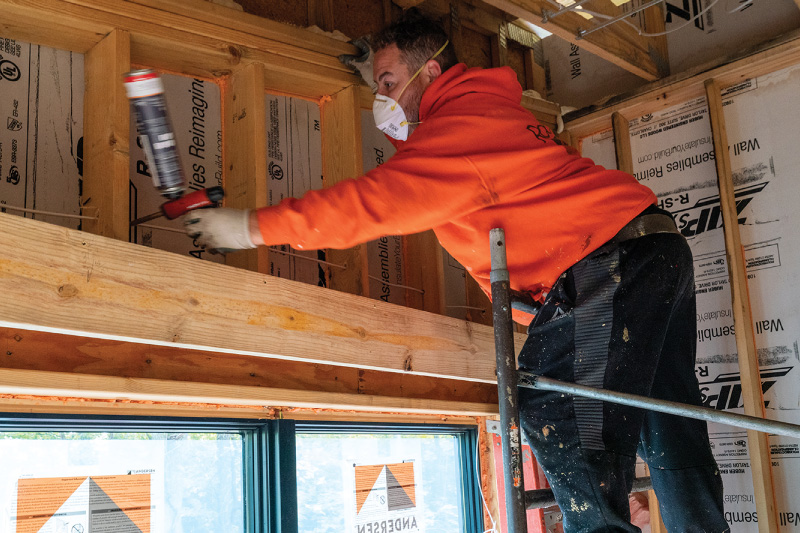
Where the walls meet the floor also deserves special attention. Many contractors prefer spray foam because it seals the many cracks in the wood framing while insulating in one step. Air sealing around windows, doors, and electrical penetrations is equally important. Use foam sealant or high-quality caulk to seal the cracks around window frames and trim. If you’re converting your existing screened porch into a multi-season room, be especially mindful of sealing up where new walls meet the old house exterior.
For moisture control, vapor retarder installation in cold climates is standard practice when installing fiberglass wall insulation. In Wisconsin, this usually means placing a vapor retarder on the interior side of the wall to stop indoor moisture from reaching cold surfaces. Combined with proper insulation and thorough air sealing, this approach supports effective moisture management in sunrooms and helps prevent mold or rot.
Windows and Heating – The Final Touch
Windows define the look of your sunroom, but they’re also a major energy factor. The U.S. Department of Energy estimates that 25–30% of a home’s heating and cooling energy loss happens through windows.
That’s why energy-efficient window upgrades for sunrooms are so important. Double- or triple-pane windows with low-E coatings reduce heat loss by up to 50% compared to single-pane glass. Proper installation matters just as much, too. Ensure your frames are sealed tightly to prevent drafts.
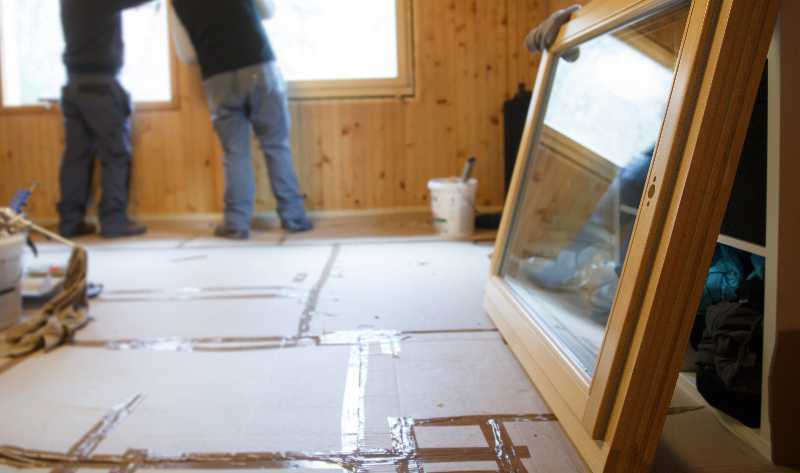
Good windows not only keep heat from leaking out in winter, but they also have better weatherstripping and frames that reduce drafts. And in summer, they help block the sun’s infrared heat while letting light in. This keeps your sunroom from turning into a greenhouse.
To make the room fully usable in winter, you’ll also need a heat source. Options include tying into your existing HVAC system, installing a ductless mini-split, or using an electric fireplace or high-efficiency space heater. Plan for summer cooling as well, whether through operable windows, ceiling fans, or a small A/C unit.
Also, be mindful of building codes. If you plan to use your multi-season room as a fully conditioned space, local building codes may require it to meet the same insulation standards as the rest of your house.
Frequently Asked Questions
Q: My existing three-season porch gets cold in the winter. Can I realistically convert it into a comfortable multi-season room?
A: Absolutely! With proper insulation, upgraded windows, and a heat source, most porches can be transformed into comfortable year-round spaces. It’s important to thoroughly insulate the ceiling, floor, and any walls, swap out any leaky single-pane windows for well-sealed double- or triple-pane windows, and add a reliable heat source.
Q: What insulation works best in Wisconsin’s climate: spray foam, fiberglass, or something else?
A: Both spray foam insulation and fiberglass are excellent insulation options for our climate. The key is to create a complete air-sealing and insulating strategy that prevents moisture and drafts. Spray foam, especially closed-cell foam, has the highest R-value per inch and doubles as an air barrier and moisture barrier. Fiberglass and cellulose are more budget-friendly but require separate air sealing. Speak with an insulation professional to help you decide the best insulation strategy for your home.
Q: I’m worried about moisture problems if I completely enclose and heat my porch. How do I prevent condensation or mold in a multi-season room?
A: Moisture control is very important. To prevent condensation and mold, you must address both humidity and surfaces. Ensure you have proper ventilation, moisture barriers, and correct insulation and air sealing techniques. Keeping humidity in check and keeping surfaces warm reduces the risk of condensation.
Q: What kind of permits do I need to insulate and convert my screened porch into a four-season room in Wisconsin?
A: Permit requirements will vary by municipality, but generally, converting a porch into a conditioned living space is a remodeling project that requires a building permit. Always check with local building authorities and consider working with a professional who understands local regulations, such as Rockweiler Insulation.
Enjoy Every Season in Comfort
With the right approach of focusing on proper insulation and design, you can turn your underused porch or sunroom into one of your favorite spaces in your house. Remember to insulate the ceiling, seal and insulate the floor, address wall gaps, and upgrade your windows. And don’t forget the heat source in winter. These steps will create lasting comfort and efficiency throughout every season.
At Rockweiler Insulation, we’ve spent decades helping homeowners tackle professional insulation installation techniques that meet code and stand up to Wisconsin’s climate. From planning to installation, we know what it takes to get the details right.
Contact us today to learn how we can help bring your Madison-area multi-season room project to life with quality insulation and air sealing.
References
Department of Safety and Professional Services. (n.d.). SPS 322 commentary: Energy conservation. State of Wisconsin. https://dsps.wi.gov/Documents/Programs/UDC/CodeArchives/SPS322Commentary.pdf.
Legal Information Institute. (n.d.). Wis. Admin. Code § SPS 322.32: Building thermal envelope. Cornell Law School. https://www.law.cornell.edu/regulations/wisconsin/Wis-Admin-Code-SS-SPS-322-32.
Rockweiler Insulation. (n.d.-a). Builders: Why proper insulation installation matters. https://rockinsul.com/builders-why-proper-insulation-installation-matters/.
U.S. Department of Energy. (n.d.-a). Update or replace windows. Energy Saver. https://www.energy.gov/energysaver/update-or-replace-windows.
U.S. Department of Energy. (n.d.-b). Window types and technologies. Energy Saver. https://www.energy.gov/energysaver/window-types-and-technologies.
Wisconsin Emergency Management. (n.d.). Extreme cold. ReadyWisconsin. https://readywisconsin.wi.gov/extreme-cold/.
Wisconsin Historical Society. (n.d.). Energy efficiency in historic buildings. https://www.wisconsinhistory.org/Records/Article/CS4206.
Wisconsin State Climatology Office. (n.d.). Sizzling summer heat in Wisconsin. Nelson Institute for Environmental Studies, University of Wisconsin-Madison. https://climatology.nelson.wisc.edu/sizzling-summer-heat-in-wisconsin/.