Updated Jan 2026
For Wisconsin homeowners and builders, comfort and efficiency go hand in hand. One of the most effective ways to improve both is through the powerful combination of fiberglass insulation and air sealing. When installed correctly, this pairing keeps homes warmer during long winters, cooler in summer, and easier on monthly energy bills.
In this post, we’ll cover how fiberglass insulation works, why air sealing is critical, and how the two together improve energy efficiency, comfort, and indoor air quality in Madison-area homes.
Understanding Fiberglass Insulation
What is Fiberglass Insulation?
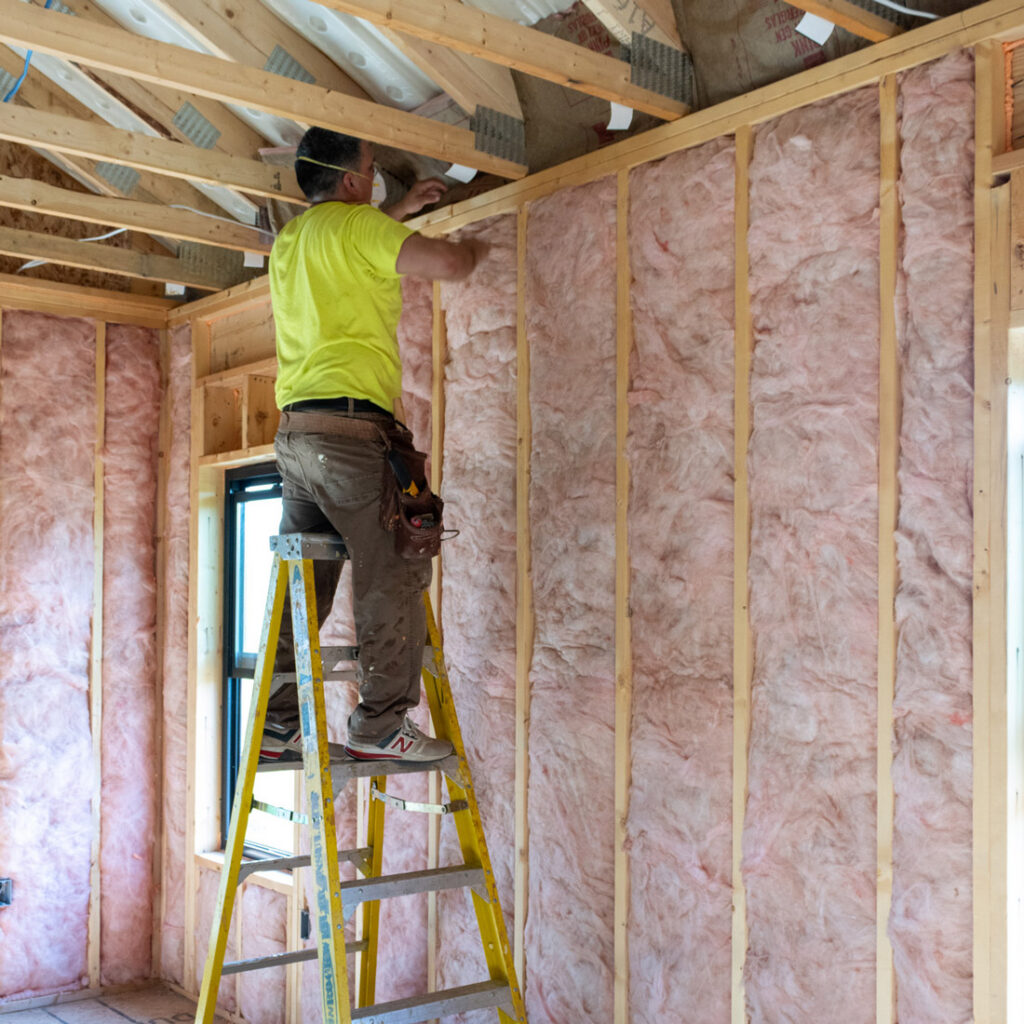
Fiberglass insulation is made from finely spun glass fibers. It has long been a popular option for homeowners and builders because it balances strong performance with affordability. It is commonly installed as fiberglass batts and loose fill, including pre-cut batts for walls and blown-in fiberglass for attics and hard-to-reach areas.
How Fiberglass Works
Fiberglass traps millions of tiny air pockets within the mat of glass fibers. These pockets slow the movement of heat, mainly through conduction. Insulation effectiveness is measured by R-value. The higher the R-value, the better the resistance to heat flow and the greater the insulating power.
Performance Specifications
Modern high-density fiberglass batts in standard 2×4 wall cavities reach about R-15, outperforming older materials. For attics in cold climates like Wisconsin, experts recommend R-49 to R-60. This R-value for Wisconsin attics helps homes retain heat during winter and stay more comfortable during summer.
Cost Advantage
Many builders and homeowners appreciate that fiberglass insulation is one of the most cost-effective insulation materials available. It costs only a few cents per square foot per R-value installed, making it a smart way to reduce heating and cooling costs.
Benefits of Fiberglass Insulation
Excellent Thermal Performance
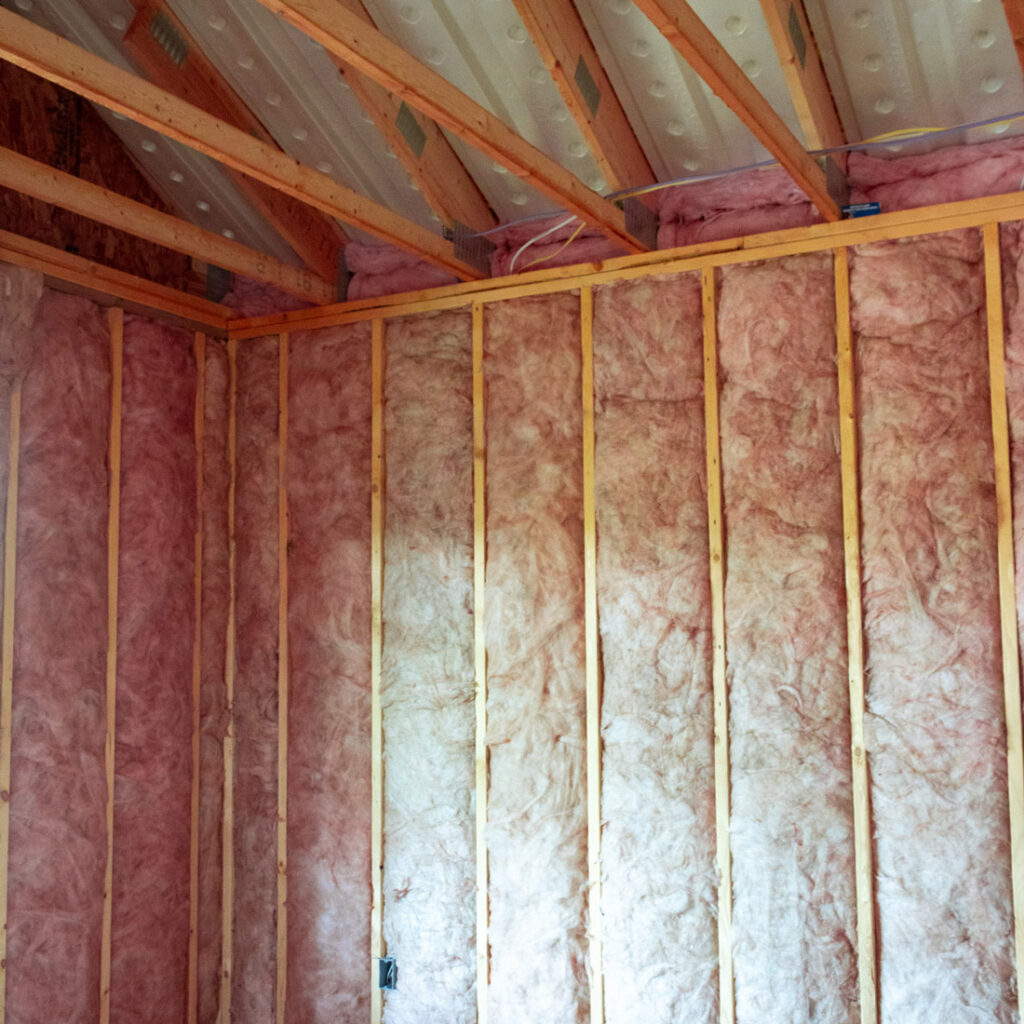
Fiberglass insulation slows heat transfer through walls, ceilings, and floors. This helps maintain steady indoor temperatures and directly supports lower winter energy bills.
Moisture and Mold Resistance
Because fiberglass is made from inorganic materials, it does not support mold growth. It resists moisture absorption and can often dry out and regain effectiveness if the source of moisture is addressed. It also helps protect a healthy indoor environment and long-term performance.
Eco-Friendliness
Most fiberglass insulation contains 40–60% recycled content. This supports the reuse of materials and reduces waste. A well-insulated home also uses less energy, lowering fossil fuel use and reducing environmental impact.
Affordability and Availability
Fiberglass remains widely available and more budget-friendly than many alternatives, including spray foam or mineral wool. Its performance and accessibility make it a chart-topper on many lists of Wisconsin home insulation tips.
The Role of Air Sealing
Why Air Sealing Matters
Insulation alone cannot stop air from leaking in and out of a home. Almost every house, even newly built ones, has small gaps that let heated or cooled air escape, reducing insulation’s effectiveness.
Common Sources of Air Leaks
Air leaks occur anywhere there are small cracks or openings in the building envelope. Common spots include around windows and exterior doors, plumbing pipes, wiring penetrations, recessed lighting fixtures, attic hatches, and sill plates.
Impact of Air Leaks
Uncontrolled airflow is the enemy of a comfortable, healthy, and efficient home. Letting these gaps and cracks continue to leak valuable air creates drafts and causes your heating or cooling system to work overtime.
At UW–Madison’s Division of Extension, their research has shown that a 1/8-inch-wide crack around a standard 36-inch-wide exterior door can allow about 500 cubic feet of air per minute to leak through. During a Wisconsin winter, that single gap can require an extra 25,000 BTUs per hour to maintain comfort. Multiply that by numerous air leaks throughout the house, and that creates a large impact on your energy bills. Air leaks can also bring in dust and pollen, making it harder to not only prevent drafts and cold spots but also to maintain healthy indoor air. They can also carry moisture into wall cavities, potentially leading to condensation or rot.
Combining Fiberglass Insulation and Air Sealing
The Power of Synergy
The best results come from pairing fiberglass insulation with air sealing. This insulation and air leaks combo delivers performance neither can achieve alone. Fiberglass slows heat transfer through walls, ceilings, and floors, while air sealing stops unwanted air leaks.
Installation Considerations
It’s important to note that fiberglass is not an air barrier on its own. Building codes and insulation experts agree that air-permeable insulation must be combined with a dedicated air barrier or sealant. Air sealing should always be done before insulation is added to maximize insulation’s effectiveness.
Practical Air Sealing Techniques
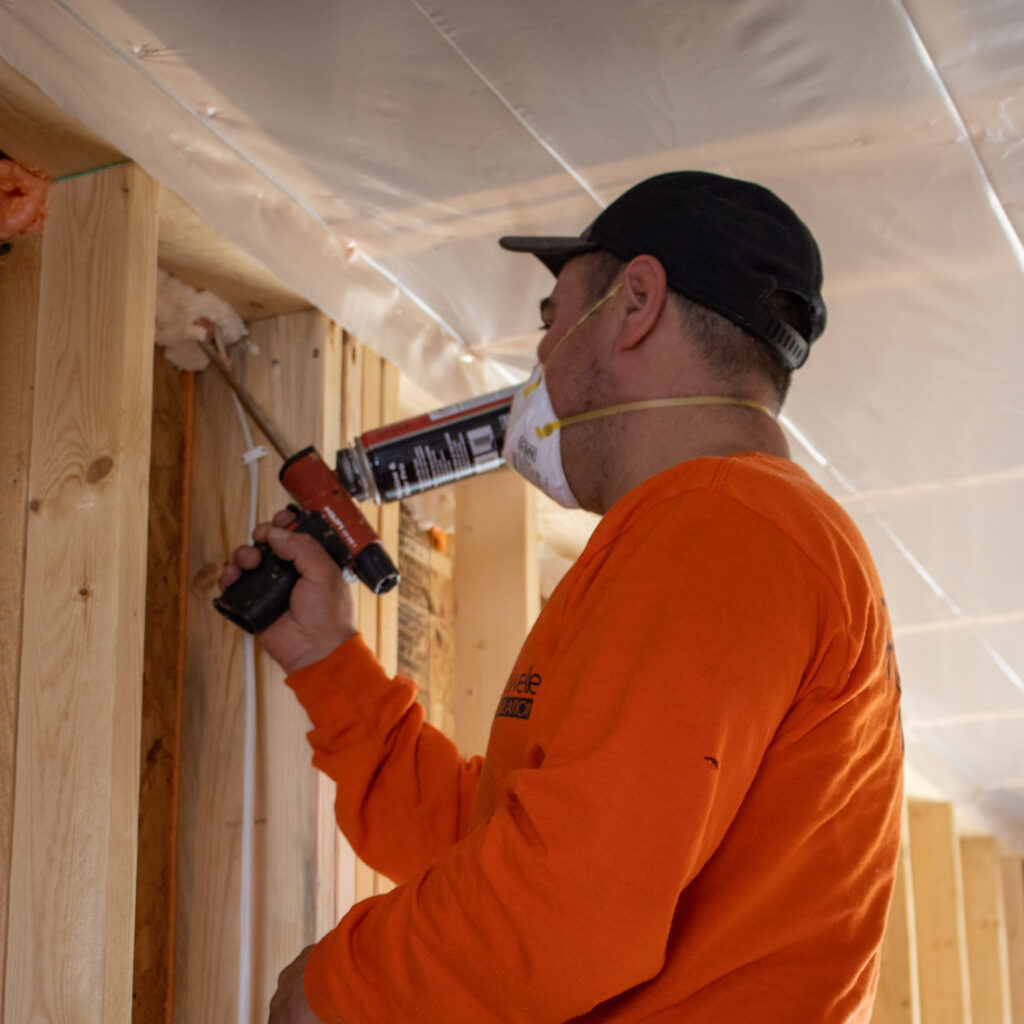
Professionals use spray foam and caulk sealing to close attic penetrations before insulation is added. Crews also seal gaps and cracks in homes, apply weatherstripping to doors and windows, and install foam gasket inserts behind outlets and light switch cover plates on exterior walls. The result is a continuous thermal barrier home that reduces heat flow in all forms.
Improved Energy Efficiency
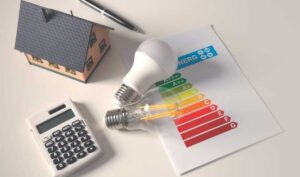
Combining insulation and air sealing is a triple win that helps homeowners save money, conserve energy, and reduce emissions. This approach dramatically reduces winter heat loss and summer heat gain. ENERGY STAR estimates that sealing air leaks and adding insulation can lower home heating and cooling costs by up to fifteen percent. In Wisconsin’s cold climate, that often translates to hundreds of dollars in annual savings.
Simple upgrades such as caulking, sealing, and weatherstripping can pay for themselves in one to two years. Larger insulation projects also tend to deliver strong returns, especially in older homes with significant air leakage. Homes that were inefficient to begin with often see the biggest gains, while even newer homes can benefit from tightening the building envelope.These improvements are among the most effective home comfort upgrades Wisconsin homeowners can make to reduce energy use while increasing comfort and long-term value.
Enhanced Comfort and Indoor Air Quality
Beyond energy savings, homeowners often notice comfort improvements right away. Drafty rooms feel warmer, cold floors are reduced, and temperatures become more consistent throughout the home. Proper insulation helps limit heat loss, while attic insulation and air sealing keep upper floors warmer in winter and cooler during summer.
Sealing leaks also helps prevent drafts and cold spots near windows, doors, and exterior walls. Homes feel less “leaky,” and temperature swings between rooms and between day and night are reduced. The result is a more stable and comfortable indoor environment during Wisconsin’s long heating season.
Air sealing also plays a major role in helping families improve indoor air quality. Many pollutants enter through the same gaps that allow air leakage, including dust, pollen, smoke, moisture, and even pests. Sealing those pathways limits how much of that outdoor air makes its way inside. This is especially helpful for households with allergies or asthma.When paired with proper, controlled ventilation that provides a fresh air supply, sealing creates a home that feels cleaner, more comfortable, and healthier year-round.
Committed to Creating an Energy Efficient Community
The benefits of fiberglass insulation and air sealing are clear: reduced air leakage, improved energy efficiency, and a more comfortable home. Rockweiler Insulation has been helping Madison-area homeowners and builders achieve these results since 1983.
As an Owens Corning® Certified Energy Expert®, Rockweiler delivers proven materials, expert installation, and industry-leading warranties. Madison residents can count on us for trusted guidance, quality workmanship, and long-term performance. Contact our expert team today to schedule professional insulation and air sealing services tailored to your Madison-area home.
References
Alliant Energy. (n.d.). Air sealing and insulation. Alliant Energy. https://www.alliantenergy.com/ways-to-save/air-sealing
ENERGY STAR. (n.d.-a). Recommended home insulation R-values. U.S. Environmental Protection Agency. https://www.energystar.gov/saveathome/seal_insulate/identify-problems-you-want-fix/diy-checks-inspections/insulation-r-values
ENERGY STAR. (n.d.-b). Seal and insulate with ENERGY STAR. U.S. Environmental Protection Agency. https://www.energystar.gov/saveathome/seal_insulate
ENERGY STAR. (n.d.). Methodology for estimated energy savings. U.S. Environmental Protection Agency. https://www.energystar.gov/saveathome/seal_insulate/methodology
Green Building Advisor. (n.d.). What’s all this hot air about air-sealing measures? Green Building Advisor. https://www.greenbuildingadvisor.com/article/whats-all-this-hot-air-about-air-sealing-measures
Insulation4Us. (n.d.). Insulation r-values guide. https://insulation4us.com/pages/insulation-r-value-guide-choosing-the-right-r-value
Insulation Institute. (2022). The facts about mold growth in glass fiber air transmission systems [PDF]. Insulation Institute. https://insulationinstitute.org/wp-content/uploads/2022/05/The-Facts-About-Mold-Growth-in-Glass-Fiber-Air-Transmission-Systems.pdf
Insulation Institute. (n.d.). Wisconsin building energy code. https://insulationinstitute.org/wp-content/uploads/2025/05/N108-WI-Energy-Code-0425.pdf
Oklahoma State University Extension. (n.d.). The importance of residential and commercial building insulation (BAE-1410) [PDF]. Oklahoma State University. https://extension.okstate.edu/fact-sheets/print-publications/bae/the-importance-of-residential-and-commercial-building-insulation-bae-1410.pdf
Rockweiler Insulation. (n.d.-a). Dreading allergy season? Air seal your Wisconsin home. Rockweiler Insulation Inc. https://rockinsul.com/dreading-allergy-season-air-seal-your-home/
U.S. Department of Energy. (n.d.-a). Air sealing your home. Energy Saver. https://www.energy.gov/energysaver/air-sealing-your-home
U.S. Department of Energy. (n.d.-b). Insulation materials. Energy Saver. https://www.energy.gov/energysaver/insulation-materials
U.S. Department of Energy. (n.d.). Ventilation. https://www.energy.gov/energysaver/ventilation
U.S. Department of Housing and Urban Development. (n.d.). Insulation and air sealing. PATH | HUD USER. https://www.huduser.gov/archives/portal/consumer/insulation_air_sealing.html
University of Wisconsin–Madison Extension. (n.d.). Infiltration losses. Wisconsin Energy Efficiency and Renewable Energy. https://fyi.extension.wisc.edu/energy/greenhouses/infiltration-losses/