If you suffer from allergies, you’ve probably noticed the sniffles start sooner each year. Wisconsin’s allergy season is now hitting earlier, lasting longer, and making more people miserable than ever before. What if you could stop allergens at the door and make your home more comfortable and efficient in the process?
Let’s explore allergies and what you can do to better prepare your home for the dreaded allergy season.
Allergies Are Hitting Wisconsin Earlier and Harder
Here in Wisconsin, we’re seeing more days of high pollen, and they’re starting earlier than in decades past. It’s been reported that pollen season is about three weeks longer on average than it was fifty years ago. Trees and plants bloom sooner, and hard frosts come later.
Local allergy experts have observed that ragweed, a major fall trigger, is sticking around two weeks longer than it used to. That’s a big deal for the 1 in 3 adults and 1 in 4 children in the U.S. who struggle with allergy symptoms.
The solution is to air seal your home. By blocking outdoor air leaks, you keep pollen and other irritants outside where they belong. Your home becomes a safe, breathable space even when pollen counts are high.
How Allergens Sneak into Your Home’s Envelope
Health officials recommend keeping your windows and doors closed to help keep troublesome pollen out. This may help some, but allergens still find their way in through gaps and cracks in your home’s envelope.
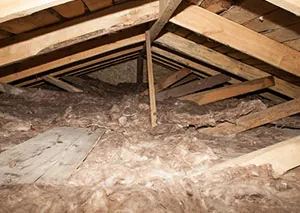
These hidden leaks are often found around:
- HVAC system ducts
- Plumbing and wiring holes
- Recessed lighting
- Chimneys and flues
- Attic hatches and soffits
- Sill plates and top plates
- Gaps between framing
This is what experts call air leakage, when outside air enters your house uncontrollably through these gaps and your heated or cooled air escapes. Relying on this kind of random airflow for home ventilation isn’t safe. It can allow too much unfiltered air into your home on cold or windy days. Or it can lead to stagnant conditions with too little fresh air on mild days. Seasonal allergens and outdoor pollutants ride this airflow straight into your home where it can reduce your home’s indoor air quality.
Sealing air leaks reduces the transfer of outdoor air pollutants into your home. To show how powerful air leaks can be, consider this: University of Wisconsin-Madison students found that a 1/8-inch crack around a 36-inch-wide door can allow in 500 cubic feet of air per minute. This would require an extra 25,000 BTUs per hour of additional heating in winter. That’s quite a bit of unwanted air inside your home.
Benefits of Air Sealing for Comfort, Health, and Savings
Sealing leaks does more than just reduce indoor allergens. It’s one of the smartest moves you can make for your home. It’s a cost-effective way to cut your heating and cooling costs, improve your home’s durability, and build a healthier indoor environment.
Comfort improves too. You’ll notice fewer drafts, more even temps, and a more stable indoor climate, no matter what’s happening outside.
Air sealing boosts your home’s energy efficiency by reducing the workload on your heating and cooling systems. That means lower utility bills and fewer breakdowns. With less uncontrolled air exchange, you will reduce your heat loss in winter and help keep humid air out in summer.
Sealing gaps also helps with pest control. Rodents and insects sneak in through the same tiny gaps as air does. ENERGY STAR certified homes use air sealing to minimize pest entry. Keeping pests out has several health benefits. It helps minimize cockroach and rodent droppings that are known allergy and asthma triggers. And you’ll be able to enjoy cleaner and healthier air.
Seal Tight and Ventilate Right
As important as it is to seal up your home, it’s just as important to ventilate it the right way. Air sealing reduces natural ventilation, making it imperative you have a plan to bring in fresh air and exhaust stale air safely. This helps to keep indoor pollutants from accumulating inside your home. A mechanical ventilation system is often needed to do the job.
Simple ventilation options include an exhaust fan in the kitchen or bathroom. More advanced systems, like HRVs (Heat Recovery Ventilators) or ERVs (Energy Recovery Ventilators), bring in fresh, filtered air without losing heating or cooling.
Wisconsin building code requires that if a room doesn’t have an openable window, it must have a mechanical system that provides at least one air change per hour of fresh outside air when occupied. These systems help remove excess moisture, VOCs (volatile organic compounds), and indoor pollutants. They bring in fresh air on your schedule, without relying on the wind.
Professional Air Sealing and Ventilation Guidance
No two homes are alike. Whether you live in an older farmhouse or a brand-new home, they all have different leakage patterns. Receiving a professional assessment of your home’s air sealing and ventilation needs is a smart choice. It’s important to note that full home air sealing must happen during construction, including top plates and wall cavities. Smaller air sealing jobs can be completed during retrofit or re-insulation work.
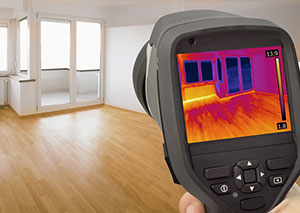
Professional services often include:
- An energy audit and consultation.
- A blower door test to pinpoint air leaks.
- An air exchange rate measurement.
- Custom air sealing and insulation recommendations.
Some common professional solutions include:
- Sealing attic penetrations before insulation is added or replaced.
- Sealing top plates during construction.
- Weatherstripping windows and doors.
- Caulking foundation sill gaps.
- Adding bathroom exhaust fans on timers.
- Installing proper attic venting.
- Upgrading to a whole-house ventilation system if needed.
The goal? Keep allergens out. Keep comfort and fresh air in. A properly sealed and ventilated home means less dust and pollen getting inside, easier temp control, fewer dust mite triggers, and a better experience every season.
Count on Your Local Air Sealing Specialist
Are you ready to enjoy next spring instead of dreading it? A well-sealed and ventilated home is an investment in your health, comfort, and savings.
Don’t wait for the pollen to pile up. Fortify your home’s defenses now. Start by reaching out to the pros for answers to all your air sealing questions.
Rockweiler Insulation is just the team to call. We have been helping Wisconsin homeowners tighten up their homes and improve their energy efficiency and comfort for over 40 years. Our experienced team provides professional assessments for your insulation, air sealing, and ventilation needs. We’re here to help you prepare for a healthier, more comfortable allergy season. Contact us today to schedule your free estimate.
References
Civic Media. (2025, April 30). Allergy season arrives in Wisconsin. Civic Media. https://civicmedia.us/news/2025/04/30/allergy-season-arrives-in-wisconsin
Department of Safety and Professional Services. (n.d.). Uniform dwelling code. State of Wisconsin. https://dsps.wi.gov/Pages/Programs/UDC/Default.aspx#:~:text=SPS%20321,while%20the%20room%20is%20occupied
U.S. Department of Energy. (n.d.). Air sealing your home. Energy.gov. https://www.energy.gov/energysaver/air-sealing-your-home
U.S. Environmental Protection Agency. (n.d.). Indoor air quality features: Indoor air quality protections. ENERGY STAR. https://www.energystar.gov/newhomes/features-benefits/indoor-air-quality-features/indoor-air-quality-protections
University of Wisconsin-Madison School of Medicine and Public Health. (n.d.). Climate change prolongs allergy miseries. UW Medicine. https://www.medicine.wisc.edu/news/climate-change-prolongs-allergy-miseries#:~:text=,Mark%20Moss%20said
UW-Madison Extension. (n.d.). Infiltration losses. UW-Madison Division of Extension. https://fyi.extension.wisc.edu/energy/greenhouses/infiltration-losses/#:~:text=Weather%20strip%2C%20replace%20gaskets%20and,per%20hour%20of%20additional%20heating
Wisconsin Department of Health Services. (n.d.). Air quality and health: Allergens. Wisconsin Department of Health Services. https://www.dhs.wisconsin.gov/air/allergens.htm#:~:text=Sealed%20mattress%20covers%20can%20help,filled%20pillows
Wisconsin Department of Health Services. (n.d.). Air quality and health. Wisconsin Department of Health Services. https://www.dhs.wisconsin.gov/air/index.htm#:~:text=table
Wisconsin Department of Administration. (2025, June). Weatherization field guide PY25-26. Wisconsin Energy and Housing. https://energyandhousing.wi.gov/Documents/Weatherization/PY25-26%20Weatherization%20Field%20Guide_Final%206-2025%20%281%29.pdf#:~:text=Air%20sealing%20affects%20the%20home%E2%80%99s,ventilation%20requirement%2C%20refer%20to%20the